

Teacup roses are a popular name for the small, colorful roses often sold as compact potted plants. While “teacup rose” is not a formal horticultural classification, these plants generally belong to the Miniature rose class, which includes roses bred for proportionately smaller flowers, foliage, and growth habits.
Despite their compact size, miniature roses offer much of the diversity found among larger roses. Flowers may be red, pink, yellow, white, or multicolored, with bloom form, fragrance, mature size, and growth habit varying by cultivar. Many perform especially well in containers, garden borders, and other spaces where a full-size rose may be impractical.
Miniature roses are also popular as gifts, with different flower colors carrying traditional associations such as love, friendship, appreciation, and new beginnings. These meanings are cultural traditions rather than botanical characteristics and can vary by source and occasion.

Flower Lovers Want to Know
Are teacup roses the same as miniature roses?
“Teacup rose” is an informal name commonly used for very small potted roses rather than a formal horticultural classification. Most roses sold under this name are miniature roses or similarly compact cultivars.
Can miniature roses be grown indoors?
Miniature roses can be kept indoors temporarily, but they generally perform best with abundant sunlight and good air circulation. Indoors, place them in the brightest location available and use a container with drainage holes. For long-term growing, many miniature roses perform better outdoors when local climate conditions are suitable.
How much sunlight do miniature roses need?
Miniature roses generally grow and flower best in full sun. Aim for at least six hours of direct sunlight each day when possible. Plants receiving too little light may produce fewer flowers and weaker growth.
Can miniature roses grow in containers outdoors?
Yes. Their compact growth makes miniature roses particularly well suited to patio and balcony containers. Choose a pot with drainage holes and enough room for the root system, use a well-drained growing medium, and check moisture regularly because containers can dry more quickly than garden soil.
What is the difference between a tea rose and a miniature rose?
Tea and Miniature are different rose classifications. Tea roses are an Old Garden Rose class known for elegant, often nodding flowers on relatively slender stems. Miniature roses are a modern class characterized by smaller-scale flowers, foliage, and generally compact growth. The distinction is based on horticultural classification rather than whether the rose is grown indoors or outdoors.
Do miniature roses bloom all year?
Not necessarily. Many miniature roses are repeat bloomers and can produce several flushes of flowers during the growing season, but flowering depends on the cultivar, climate, light, temperature, and care. They should not be described universally as blooming year-round.
What do the different colors of miniature roses mean?
Rose-color meanings are traditional cultural associations rather than botanical characteristics, and interpretations can vary. Red roses are commonly associated with romantic love, pink with admiration or appreciation, yellow with friendship and happiness, and white with purity or new beginnings.
Quick Facts
| Feature | Miniature Roses |
| Common name | Miniature rose; “teacup rose” (informal) |
| Plant type | Woody flowering shrub |
| Rose class | Miniature |
| Average height | About 15–30 inches; varies by cultivar |
| Light | Full sun |
| Soil | Fertile, well-drained |
| Water | Water as needed; avoid prolonged waterlogging |
| Flower colors | Red, pink, yellow, white, purple, blends and others |
| Bloom habit | Many are repeat flowering |
| Best uses | Containers, borders, small gardens, rock gardens |
| Indoor growing | Best for temporary display; generally better outdoors long-term |
| Fragrance | Varies by cultivar |
Teacup Roses: Miniature Rose Varieties, Meanings & Care
Miniature roses combine the familiar beauty of larger roses with compact growth, making them well suited to containers, patios, borders, and other small spaces.
In this guide, you’ll discover popular miniature rose varieties, traditional rose-color meanings, and practical care tips for keeping these compact roses healthy and blooming.
History of Miniature Roses
Miniature roses are part of a long history of rose cultivation and breeding. Rather than representing a separate rose species, modern miniature roses include compact cultivars selected for their proportionately small flowers, foliage, and growth habits.
Modern miniature roses trace part of their ancestry to dwarf China roses, which played an important role in the development of the Miniature class. Over time, rose breeders developed an increasingly diverse range of compact plants with different flower colors, forms, growth habits, and levels of fragrance.
Today, the American Rose Society recognizes Miniature as a distinct class of modern roses. It also recognizes Miniflora, a separate class introduced in 1999 for roses that generally fall between Miniature and larger rose classes in flower and foliage size.

What Are Teacup Roses?
“Teacup rose” is an informal name often used for particularly small miniature roses, especially compact plants sold in containers. It is not a formal botanical or horticultural classification. The American Rose Society recognizes Miniature as a distinct class of modern roses.
Miniature roses have the familiar appearance of larger roses but on a smaller scale. Their compact growth makes them useful in containers, garden borders, rock gardens, and other spaces where larger rose bushes may be impractical.
Characteristics
Miniature roses are characterized by proportionately small flowers, foliage, and growth habits. Although their mature size varies considerably among cultivars, the American Rose Society notes that miniature rose plants average approximately 15 to 30 inches tall.
Flowers are available in many colors, including red, pink, yellow, white, and multicolored combinations. Flower shape, size, petal count, and fragrance also vary by cultivar, so not every miniature rose is fragrant.
Many miniature roses are repeat bloomers, producing multiple flushes of flowers during the growing season when provided with suitable light, water, and growing conditions.
Growth Habits
Most miniature roses grow as compact shrubs, although mature height and spread vary by cultivar. They generally flower best in full sun and perform well in fertile, well-drained soil with consistent moisture.
Despite their small size, miniature roses have many of the same basic growing requirements as larger roses. They can also experience common rose pests and diseases, so good air circulation, appropriate watering, and regular observation are important.
Miniature roses grow particularly well in containers when given enough room for their roots. Choose a pot with drainage holes and a size appropriate for the individual plant rather than relying on a fixed minimum pot size. Container-grown roses may require more frequent watering than roses planted in the ground, especially during warm weather.
Although miniature roses are commonly sold as indoor gift plants, they should not automatically be treated as traditional houseplants. They need abundant light, and many perform better outdoors over the long term when local growing conditions are suitable.
Teacup Rose Color Meanings
Miniature roses are available in many colors, and rose colors have long been associated with different emotions and occasions. These meanings are cultural traditions rather than botanical characteristics, and interpretations can vary by culture, time period, and personal preference.
Color Symbolism
Some of the most common traditional associations include:
- Red – Commonly associated with romantic love, passion, and affection. Red miniature roses are a popular choice for anniversaries, Valentine’s Day, and other romantic occasions.
- Pink – Often associated with admiration, appreciation, gratitude, and affection. Pink roses can work well for birthdays, thank-you gifts, and celebrations.
- White – Traditionally associated with purity, innocence, and new beginnings. White roses are frequently used for weddings and other meaningful ceremonies.
- Yellow – Commonly associated with friendship, happiness, and warmth. Yellow miniature roses can be a cheerful choice for birthdays, congratulations, or simply brightening someone’s day.
- Purple or lavender – Often associated with enchantment, admiration, or a sense of uniqueness. As with other rose colors, interpretations vary, so these associations are best treated as traditional symbolism rather than fixed meanings.
Choosing Teacup Roses for Different Occasions
Because miniature roses combine traditional rose symbolism with a compact size, they can make attractive gifts for many occasions. When choosing a color, consider both its traditional association and the recipient’s personal preferences.
- Birthdays – Choose a miniature rose in the recipient’s favorite color or select yellow or pink for a cheerful, celebratory gift.
- Weddings – White, pink, and other softly colored miniature roses can be incorporated into bouquets, centerpieces, and other floral arrangements.
- Anniversaries – Red or pink miniature roses are traditional choices for expressing love, affection, and appreciation.
- Thank-you gifts – Pink roses are commonly associated with gratitude and appreciation.
- Just because – Choose a color the recipient enjoys rather than feeling restricted by traditional flower meanings.
Popular Varieties of Miniature Roses
Miniature roses come in an impressive range of colors, flower forms, and growth habits. Some remain especially compact, while others develop wider or more vigorous growth, so it is important to consider mature size as well as flower color when choosing a rose for a container or small garden.
Here are six distinctive miniature rose cultivars to consider.
 Baby Masquerade
‘Baby Masquerade’ is a classic miniature rose introduced in 1956. Its small double flowers open yellow with coral-pink edges and gradually develop deeper pink to rose-red coloring as they mature. Because flowers of different ages may appear on the plant at the same time, a single plant can display several colors.
The flowers have a slight fragrance and appear in small clusters. With its compact growth habit and repeat flowering, ‘Baby Masquerade’ provides changing color on a relatively small rose plant.
 Green Ice
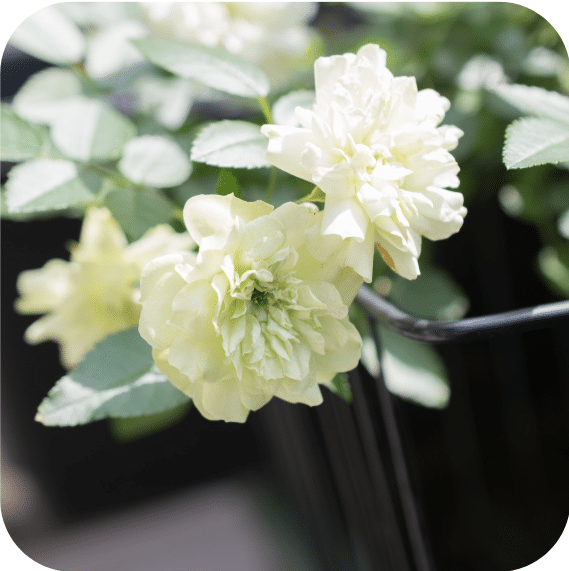
‘Green Ice’ is an unusual miniature rose introduced in 1971 by breeder Ralph S. Moore. Pink flower buds open into small, fully double creamy-white flowers that gradually develop a pale green tint as they mature.
The flowers have a light fragrance and appear in clusters above glossy, dark-green foliage. The plant develops a low, spreading habit, making it particularly useful near the front of borders, in containers, or where its arching growth can be appreciated.
 Rainbow’s End

‘Rainbow’s End’ is a colorful miniature rose known for flowers that change appearance as they mature. The double blooms begin golden yellow and develop reddish-orange coloring, creating a blend of warm colors on the plant.
This compact rose develops a bushy growth habit and glossy green foliage. Mature plants are generally around 15 to 18 inches tall, making ‘Rainbow’s End’ suitable for low borders, containers, and small garden spaces.
 Cupcake

‘Cupcake’ is a pink miniature rose bred by Mark Spies and introduced in 1981. Its double flowers are clear pink and have a mild fragrance, with blooms appearing repeatedly from spring into fall under suitable growing conditions.
The compact, bushy plant generally reaches about 1 to 1½ feet tall with a similar spread. ‘Cupcake’ works well in containers, at the front of borders, and in other small spaces. It received an American Rose Society Award of Excellence in 1983.
 Rise ’n’ Shine

‘Rise ’n’ Shine’ is a yellow miniature rose bred by Ralph S. Moore and introduced in 1977. It produces bright yellow double flowers on a compact plant and repeat blooms throughout the growing season. Its small size and vivid flower color make it useful for containers, edging, and other small garden spaces.
The Royal Horticultural Society classifies ‘Rise ’n’ Shine’ as a Miniature rose.
 Sweet Chariot

‘Sweet Chariot’ offers a different color palette from the reds, pinks, whites, and yellows commonly associated with roses. This miniature cultivar produces clusters of mauve to lavender-purple flowers and has a spreading to arching growth habit.
Miniature roses may be smaller than many other garden roses, but their basic growing requirements are similar. Plenty of sunlight, good drainage, appropriate watering, and regular maintenance will help keep plants healthy and encourage repeat flowering.
How to Care for Miniature Roses
Although miniature roses are smaller than many garden roses, they have similar basic growing requirements. Providing the right balance of sunlight, moisture, drainage, nutrients, and seasonal care will encourage healthy growth and repeat flowering.
The following care guidelines apply broadly to miniature roses, although individual cultivars may have slightly different needs.
Light
Miniature roses generally perform best in full sun. For healthy growth and abundant flowering:
- Provide at least six hours of direct sunlight each day when possible.
- Choose an open location where surrounding plants or structures won’t heavily shade the roses.
Soil
Miniature roses grow best in fertile soil that drains well while retaining adequate moisture.
- In the garden: Choose fertile, well-drained soil where water does not regularly collect around the roots.
- In containers: Use a quality potting mix that provides both drainage and moisture retention.
- Avoid persistently waterlogged soil, which can contribute to root problems.
Water
Water according to the plant’s needs rather than following a rigid schedule.
- Water thoroughly enough to moisten the root zone.
- Allow excess water to drain freely from containers.
- Check soil moisture regularly, especially during hot or windy weather.
- Water near the base of the plant when possible rather than routinely wetting the foliage.
Container-grown miniature roses may need water more frequently than roses growing in the ground because potting mixes can dry relatively quickly.
Fertilizer
Miniature roses can benefit from supplemental nutrients during active growth.
- Use a fertilizer formulated for roses or flowering plants.
- Follow the manufacturer’s application rate and frequency.
- Avoid applying extra fertilizer in an attempt to force additional flowering.
- Reduce or stop feeding as active growth slows toward winter dormancy in climates where roses experience a winter rest period.
Pruning and Deadheading
Regular maintenance helps keep miniature roses tidy and encourages healthy growth.
- Remove dead, damaged, or diseased stems when they appear.
- Prune weak or crossing growth when necessary.
- Maintain an open growth habit that allows good air circulation.
- Remove spent flowers, or deadhead, to keep the plant tidy and limit hip development.
Repeat-flowering miniature roses may produce additional flushes of flowers throughout the growing season.
Growing Miniature Roses in Containers
Their compact growth makes many miniature roses particularly well suited to container gardening.
- Choose a container with drainage holes and enough room for the root system.
- Avoid relying on a fixed pot size because cultivars and individual plants vary.
- Check soil moisture frequently during warm weather.
- Repot when roots become crowded, the plant outgrows its container, or the potting mix has deteriorated.
Winter Care
Cold tolerance varies by cultivar, and container-grown roses can be more vulnerable to freezing because their roots have less insulation than roses planted in the ground.
- Check the cold hardiness of your particular cultivar.
- Protect containers from prolonged or severe freezing conditions.
- In cold climates, move pots to an appropriate sheltered location or use a suitable overwintering method.
- Avoid assuming that a rose hardy in the ground will be equally hardy when growing in an exposed container.
Can Miniature Roses Grow Indoors?
Miniature roses are frequently sold as indoor gift plants, but they should not be treated like typical low-light houseplants. Roses require abundant light, and providing enough sunlight indoors can be challenging. For long-term cultivation, many miniature roses perform better outdoors when the climate is suitable.
If keeping a miniature rose indoors temporarily:
- Provide plenty of light: Place the rose in the brightest location available, such as a sunny window, or use supplemental grow lights if necessary.
- Check soil moisture regularly: Water when needed, allowing excess water to drain freely from the container.
- Watch for pests: Inspect the leaves, stems, and flower buds regularly for signs of common rose pests.
- Transition outdoors gradually: When temperatures are suitable, gradually acclimate the plant to stronger outdoor sunlight rather than moving it directly from indoors into full sun.
Outdoors, miniature roses can benefit from stronger sunlight, better air circulation, and natural seasonal conditions. Consider the cold hardiness of the individual cultivar before leaving a container-grown rose outdoors year-round.
Final Sprouts of Wisdom
Miniature roses bring classic rose flowers to compact plants that work especially well in containers, small gardens, borders, and other limited spaces. Although very small potted roses are sometimes marketed as “teacup roses,” Miniature is the recognized horticultural classification.
When choosing a miniature rose, look beyond flower color and consider mature plant size, growth habit, disease resistance, fragrance, and suitability for your climate. Red, pink, yellow, and white roses also carry traditional symbolic associations and are commonly chosen for gifts and special occasions.
Whether you’re growing one in a patio container or adding several to a garden border, giving miniature roses plenty of light, good drainage, appropriate watering, and room for healthy growth will help them perform their best.
Similar Posts:
How to Create a Butterfly Garden – Flowers That Attract Butterflies
all images from Canva

